
Tooth decay is a common dental condition that affects people of all ages, from children to older adults. When left untreated, cavities can progress beyond minor discomfort and lead to pain, infection, structural tooth damage, and even tooth loss. Early intervention through tooth filling remains one of the most effective ways to preserve natural teeth. Among the many restorative options available today, amalgam tooth filling stands out as one of the most established and time-tested solutions in dentistry.
Although newer tooth-coloured materials such as composite resin and porcelain restorations have gained popularity, amalgam fillings continue to be used in Singapore due to their strength, durability, and cost-effectiveness. For certain clinical situations, amalgam remains a practical and reliable choice.
This article provides a comprehensive overview of amalgam tooth filling, including its composition, benefits, limitations, safety considerations, the procedure involved, and its role in modern tooth filling treatments in Singapore.
Disclaimer: This article is for informational purposes only. It does not replace professional dental advice. For diagnosis or treatment recommendations, please consult a qualified dental professional.
Understanding Dental Amalgam: The Chemistry Behind the “Silver” Filling
Despite being commonly referred to as a “silver filling,” dental amalgam is not made of silver alone. It is a carefully engineered alloy composed of several metals, each contributing specific properties to the final restoration.
Dental amalgam typically consists of:
- Liquid mercury, which makes up approximately 50% of the mixture and acts as the binding agent
- Silver, which provides strength and contributes to the metallic appearance
- Tin and copper, which enhance durability and reduce corrosion
- Zinc, included in some formulations to prevent oxidation during manufacturing
When the dentist mixes the powdered metals with liquid mercury, the result is a malleable, putty-like material. This mixture is packed into the prepared cavity, where it gradually hardens into a strong, solid metallic restoration within minutes.
This unique setting process allows amalgam to adapt well to cavity walls, contributing to its long-standing success in restorative dentistry.s a pliable “putty.” This putty is packed into the cavity, where it hardens into a solid metallic mass within minutes.
Why Amalgam Fillings Are Still Used in Singapore
Despite advancements in aesthetic dental materials, amalgam tooth fillings continue to hold a role in Singapore’s dental landscape. Dentists may recommend amalgam for specific reasons related to performance, reliability, and patient needs.
Exceptional Strength and Durability
Amalgam fillings are exceptionally strong and can withstand heavy biting and chewing forces. This makes them particularly suitable for molars and premolars, which bear the brunt of daily mastication. In patients with strong bite forces or habits such as teeth grinding, amalgam often outperforms other materials.
Long Lifespan
With proper oral hygiene and regular dental check-ups, amalgam fillings can last 10 to 15 years or longer. In many cases, they outlast composite resin fillings, making them a dependable long-term solution for tooth filling in Singapore.
Cost-Effective Treatment Option
Compared to tooth-coloured restorations, amalgam fillings are generally more affordable. For patients seeking a durable solution without a higher financial commitment, amalgam remains an economical choice, particularly for larger cavities.
Less Technique-Sensitive Placement
Unlike composite fillings, which require a dry operating field to ensure proper bonding, amalgam is less sensitive to moisture during placement. This makes it easier to place in difficult-to-access areas and in patients who may struggle to remain still for extended periods.
The Mercury Debate: Is Dental Amalgam Safe?
One of the most frequently asked questions in Singapore dental clinics is whether the mercury in amalgam fillings poses a health risk.
Singapore MOH and HSA Position
The Ministry of Health (MOH) and the Health Sciences Authority (HSA) in Singapore follow international guidelines set by organisations such as the World Health Organization (WHO) and the FDI World Dental Federation. Based on extensive scientific evidence, dental amalgam is considered safe for the general population.
While amalgam fillings do release trace amounts of mercury vapour—especially during chewing—the exposure level is significantly lower than everyday environmental sources, including certain types of seafood.
The Minamata Convention and Singapore’s Approach
Singapore is a signatory to the Minamata Convention on Mercury, a global initiative aimed at reducing mercury pollution. As part of this commitment, Singapore has adopted a phase-down approach, not a complete ban, on the use of dental amalgam.
Current recommendations generally advise avoiding new amalgam fillings in:
- Pregnant or breastfeeding women
- Children under 15 years old
- Patients with impaired kidney function
Dentists in Singapore assess each patient individually and may recommend alternative materials when appropriate.
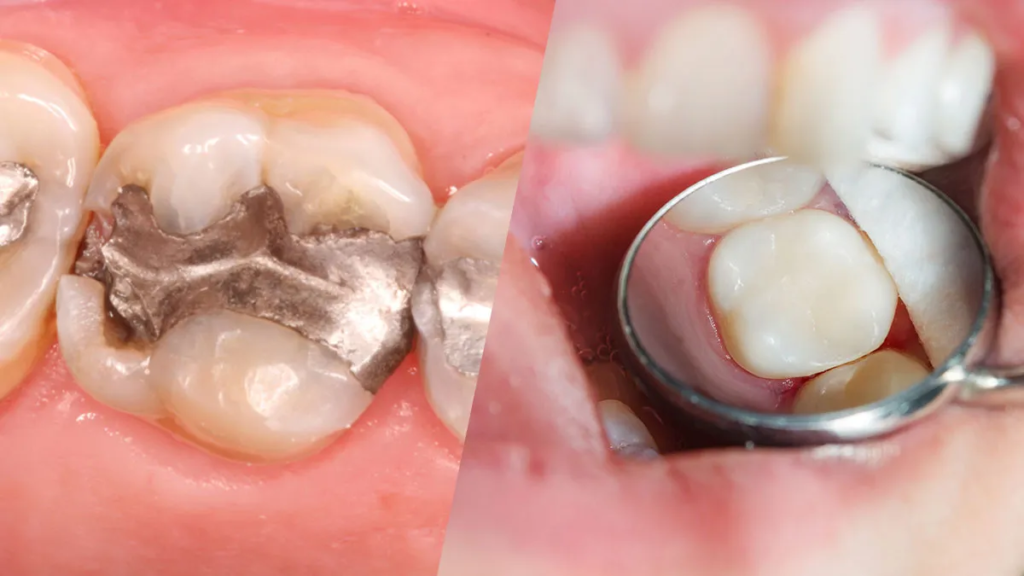
Amalgam vs Composite Tooth Filling
| Feature | Amalgam Filling | Composite Filling |
|---|---|---|
| Colour | Silver | Tooth-coloured |
| Durability | Very high | High |
| Aesthetics | Poor | Excellent |
| Cost in Singapore | Lower | Higher |
| Common Use | Back teeth | Front & back teeth |
Dentists in Singapore often help patients choose the best option based on location of the tooth, budget, and aesthetic preference.
The Amalgam Tooth Filling Procedure
If your dentist recommends an amalgam tooth filling in Singapore, the procedure is straightforward and usually completed in a single visit.
Step 1: Dental Examination and Diagnosis
The dentist examines the affected tooth and may take X-rays to determine the extent of decay and assess suitability for amalgam restoration.
Step 2: Local Anaesthesia
Local anaesthesia is administered to ensure patient comfort throughout the procedure.
Step 3: Removal of Tooth Decay
The decayed portion of the tooth is carefully removed. The cavity is shaped in a way that helps retain the amalgam filling securely.
Step 4: Placement of the Amalgam Filling
The amalgam material is packed into the cavity and condensed to eliminate gaps and ensure stability.
Step 5: Shaping and Polishing
Once set, the filling is shaped to align with the patient’s bite and polished for comfort. Patients are usually advised to avoid chewing on the treated tooth for a few hours.
Is Amalgam Tooth Filling Right for You?
Amalgam tooth filling may be suitable if you:
- Have large cavities in back teeth
- Prioritise strength and durability over aesthetics
- Prefer a cost-effective tooth filling solution
- Have strong chewing forces or grinding habits
However, if the tooth is visible when smiling or aesthetics are a priority, your dentist in Singapore may recommend composite resin or ceramic restorations instead.
Tooth Filling Singapore: Making the Right Choice
Modern dentistry in Singapore offers a wide range of tooth filling materials, each with its own advantages and limitations. The choice of filling should always be based on a comprehensive dental assessment rather than trends alone.
While amalgam may no longer be the most fashionable option, its clinical performance remains well-documented and respected. In certain high-risk or high-stress situations, amalgam continues to deliver results where other materials may fail.
Conclusion
Amalgam tooth filling is a material in the twilight of its career in Singapore, as the dental industry continues to move toward aesthetic and metal-free restorations. Nevertheless, amalgam remains a valuable and effective option for specific clinical scenarios, particularly in posterior teeth and cases requiring maximum durability.
When considering a Tooth Filling Singapore, the decision should be a collaborative discussion between you and your dentist. While silver fillings may not match the aesthetics of modern alternatives, their legacy of strength, longevity, and reliability is undeniable.
If durability, function, and cost-effectiveness are your primary concerns, amalgam tooth filling may still be the right solution for your dental needs.